Swim Teach Store
Butterfly Teaching Toolkit – Lesson Plans, Drills & Teaching Phrases
Butterfly Teaching Toolkit – Lesson Plans, Drills & Teaching Phrases
Couldn't load pickup availability
Digital PDF download • No physical item shipped
When butterfly feels difficult to teach, know what to try next
Butterfly can be one of the most intimidating strokes to teach.
The swimmer struggles to create the body wave.
The dolphin kick comes from the knees instead of the hips.
The arms recover awkwardly.
Breathing destroys the rhythm.
Or the swimmer can perform the individual parts, but everything falls apart when they try to put the whole stroke together.
And sometimes the real difficulty is knowing where to start.
The Butterfly Teaching Toolkit gives you practical help for those moments.
A progression to follow. A drill to try. Another way to explain it.
So instead of wondering “How do I break this down?” or “What should I try next?”, you have ideas ready to use.
SEE INSIDE THE BUTTERFLY TOOLKIT
Three common butterfly teaching problems. Three practical solutions.
“I’m not sure how to break butterfly down.”
Butterfly asks the swimmer to coordinate body movement, dolphin kick, arm action, breathing and timing.
Trying to teach everything together can quickly become overwhelming — for the swimmer and the teacher.
PLAN IT
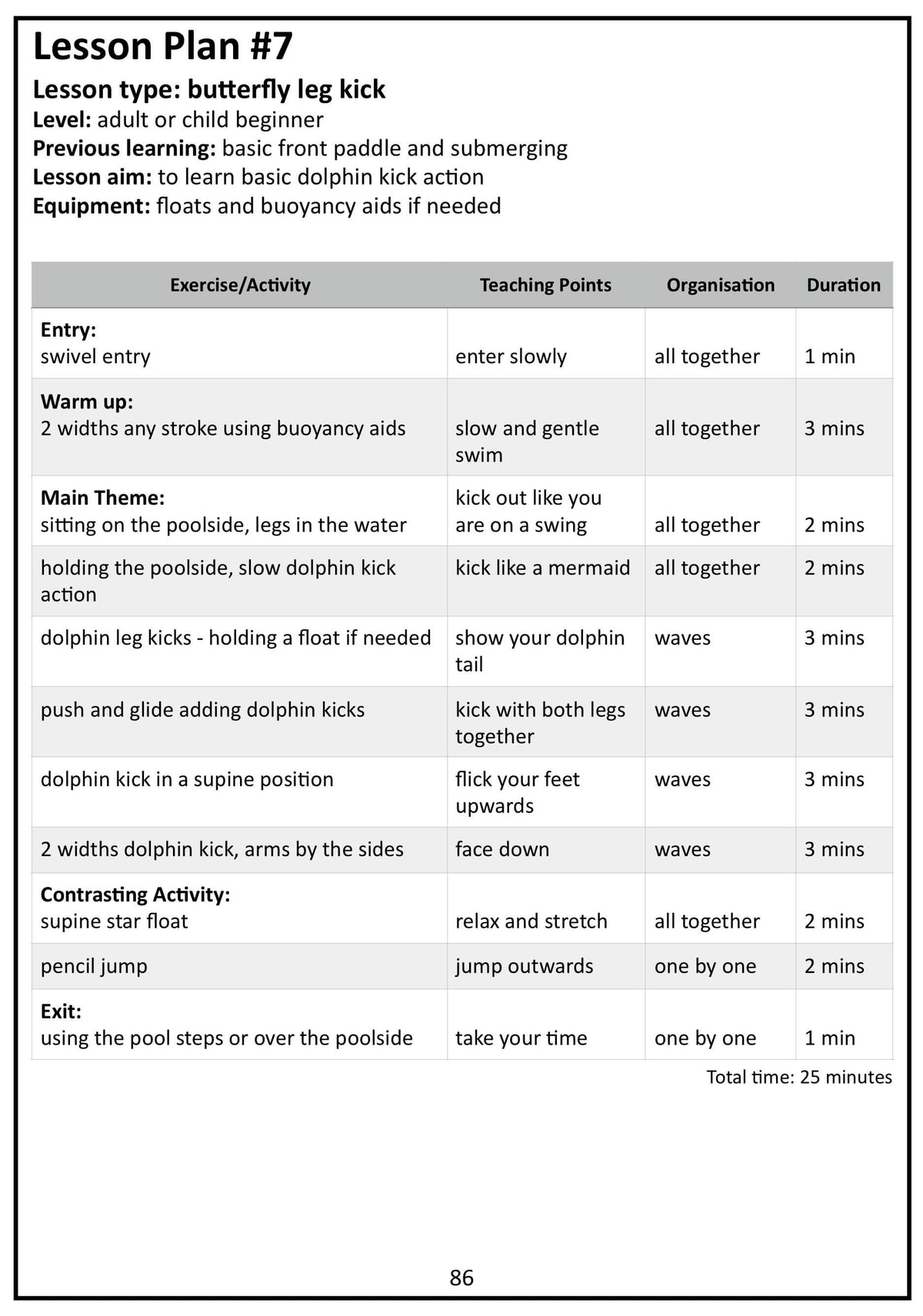
The toolkit includes 18 ready-made Butterfly Lesson Plans designed to develop the stroke progressively.
Use them to:
- break butterfly into manageable stages
- introduce skills in a logical order
- develop individual stroke components before combining them
- build from isolated movements towards whole-stroke butterfly
- reduce lesson-planning time
- give your teaching a clear progression
Rather than trying to teach the finished stroke immediately, you have a route to follow.
“I can see what’s wrong, but I need an exercise to fix it.”
Perhaps the swimmer is kicking too much from the knees.
Perhaps the body movement is too exaggerated.
Perhaps the arms and legs are working independently rather than rhythmically.
Or perhaps they simply cannot connect the two kicks with the arm pull.
Recognising the problem is one thing.
Knowing what drill to use next is another.
PRACTISE IT
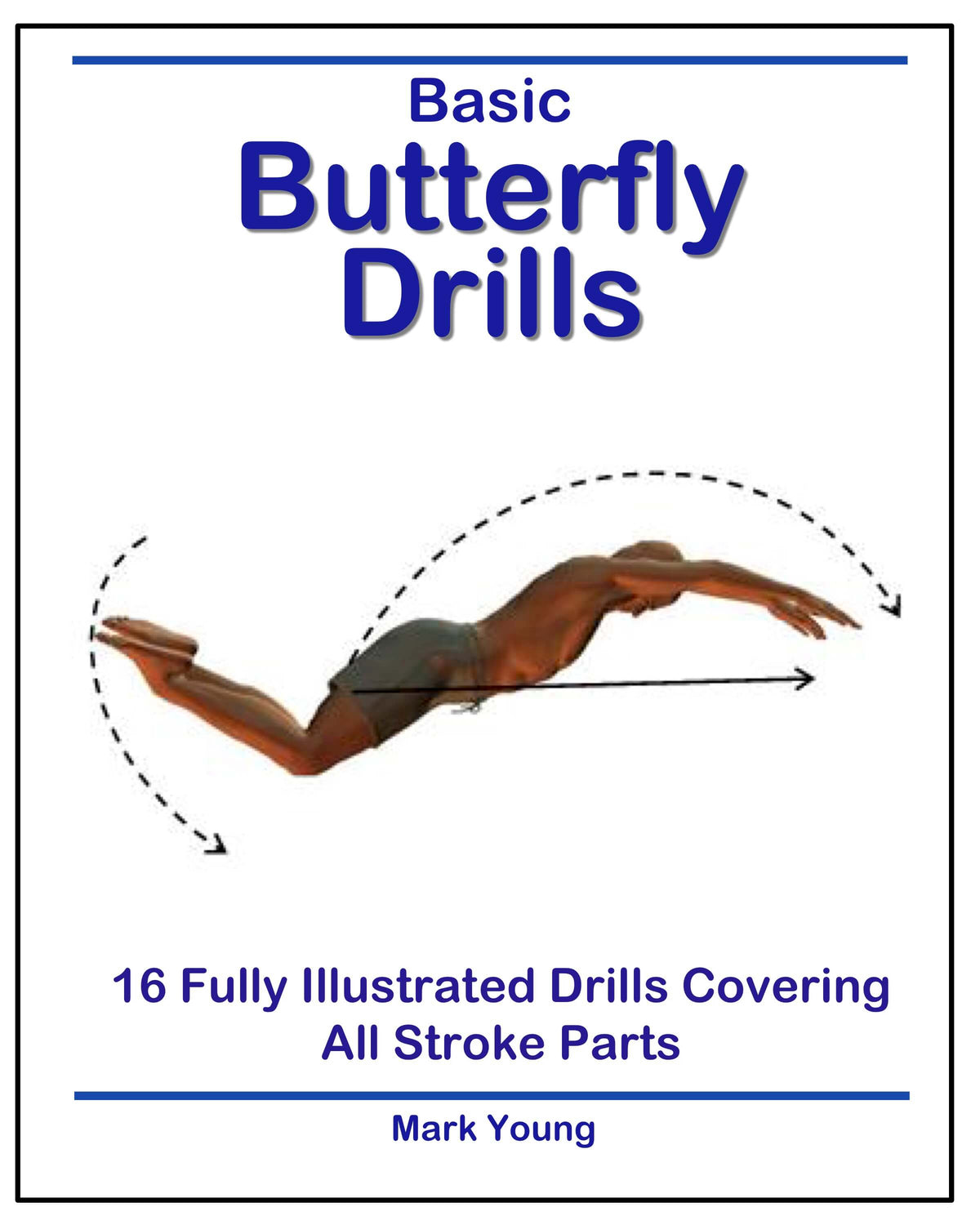
The toolkit includes 16 practical Butterfly Drills covering:
- body movement and undulation
- dolphin kick
- arm action
- pull and recovery
- breathing
- two kicks to one pull
- timing and coordination
- complete butterfly.
Instead of asking the swimmer to repeat the whole stroke badly, isolate the problem and give them something specific to practise.
★★★★★
“Butterfly is one of the strokes I have always found hardest to teach. Having the drills broken down into individual skills gave me much more confidence about what to try next.”
Harrison - Swimming Teacher, UK
“I know what I want them to do, but I can’t find the right words.”
Butterfly can be particularly difficult to explain.
Words such as undulation, rhythm or two kicks to one pull may make perfect sense to a swimming teacher...
...but mean very little to the swimmer in front of you.
One swimmer may respond to a technical instruction.
Another needs a visual image.
Another needs a rhythm they can repeat in their head.
Sometimes the problem is not the skill.
It is the language being used to teach it.
EXPLAIN IT
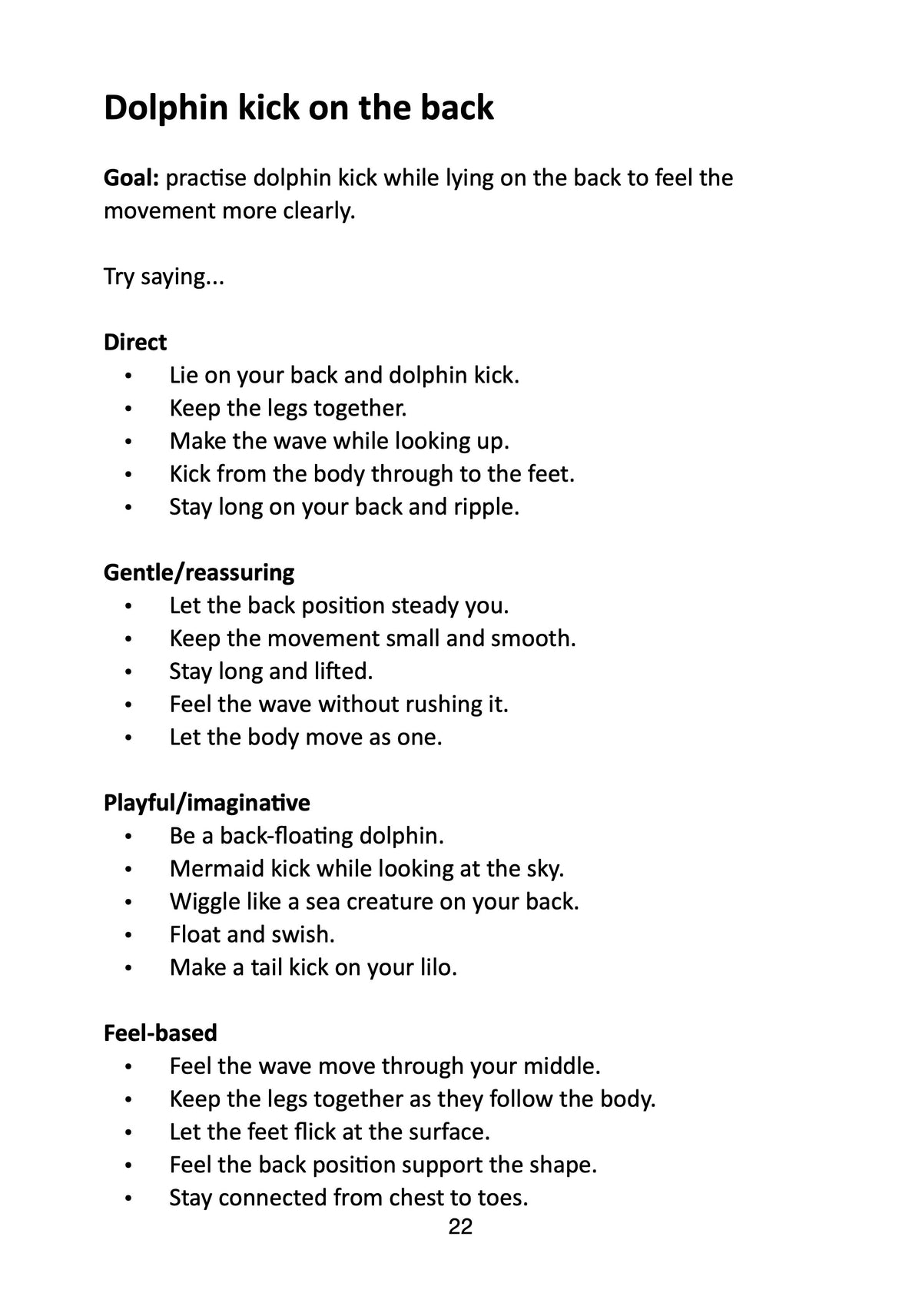
The toolkit includes Phrases for Teaching Butterfly, with hundreds of alternative cues and explanations covering:
- body movement and position
- body wave and undulation
- dolphin kick
- arm action
- breathing
- timing and coordination
- two kicks to one pull
- whole-stroke swimming
- common butterfly faults.
When your usual explanation is not connecting, try another way of saying it.
Because sometimes changing the words is what finally makes the movement click.
Plan it. Practise it. Explain it.
The real value of the Butterfly Teaching Toolkit is not simply that you receive three PDFs.
It is that the three resources work together.
Imagine a swimmer who cannot coordinate the kick and arm action.
You can:
1. Find the progression
Use the lesson plans to establish what should be taught before attempting the complete stroke.
2. Choose a drill
Select an exercise that isolates the kick, arm action or timing.
3. Change the explanation
Try a different cue if the swimmer understands the task but still cannot produce the movement.
That gives you three ways into the same teaching problem.
Progression. Practice. Communication.
That is what turns three separate resources into a practical butterfly problem-solving toolkit.
What’s inside the Butterfly Teaching Toolkit?
Butterfly Lesson Plans
18 ready-made lessons
Structured progressions for developing the individual elements of butterfly before bringing them together into the complete stroke.
Use them to give your lessons structure and remove the uncertainty around what to introduce next.
Butterfly Drills
16 practical exercises
Targeted drills for body movement, dolphin kick, arms, breathing, timing and complete-stroke coordination.
Use them when a swimmer needs to isolate and practise a particular part of the stroke.
Phrases for Teaching Butterfly
Hundreds of alternative teaching cues
Different ways to explain butterfly when your usual instruction is not getting through.
See inside the toolkit before you buy
Want to see how the lesson plans, drills and teaching phrases work together?
Take a look inside the Butterfly Teaching Toolkit before purchasing.
The preview includes genuine sample material from all three resources and demonstrates how you can move from:
a teaching problem → a progression → a drill → an alternative cue
SEE INSIDE THE BUTTERFLY TOOLKIT
★★★★★
“There are plenty of ideas here without lots of unnecessary theory. I can quickly find something useful and take it straight into a lesson.”
Sam - Swimming Teacher, NYC
Made for swimming teachers
The Butterfly Teaching Toolkit is particularly useful if you:
- find butterfly one of the more difficult strokes to teach
- are unsure how to introduce butterfly progressively
- need more ideas for dolphin kick or body movement
- teach swimmers who struggle with two kicks to one pull
- want practical drills for timing and coordination
- sometimes struggle to explain butterfly simply
- are newly qualified and want more structure
- are experienced but want additional poolside ideas
You do not need to make butterfly more complicated.
You need practical answers to the questions that appear during real lessons:
What should I teach first?
What drill should I try?
How can I explain this differently?
That is what this toolkit is designed to provide.
Created from more than 30 years of swimming teaching
I’m Mark Young, founder of Swim Teach.
The resources I create are based around practical teaching problems rather than unnecessary theory. Swim Teach describes its toolkits, lesson plans and teaching phrases as resources developed from real poolside experience.
Over years of teaching, one thing becomes very clear:
Different swimmers need different routes into the same skill.
One swimmer needs the movement broken down further.
Another needs a different drill.
Another understands the movement physically but needs simpler language.
The Butterfly Teaching Toolkit gives you more of those options.
Everything in one digital toolkit
You receive:
✓ 18 Butterfly lesson plans
✓ 16 practical drills and exercises
✓ Hundreds of teaching phrases and alternative cues
✓ 3 downloadable PDF resources
✓ Instant digital access
✓ Use on mobile, tablet or computer
✓ Refer back to the resources whenever you need another teaching idea.
SEE INSIDE THE BUTTERFLY TOOLKIT
The next time butterfly gets stuck, you’ll have somewhere to turn
When the body wave is not working...
When the kick is coming from the knees...
When the arms and legs will not coordinate...
When breathing ruins the rhythm...
When two kicks to one pull simply is not happening...
Or when your usual explanation is not getting through...
You do not have to keep asking the swimmer to repeat the same unsuccessful stroke.
Find the progression. Choose a drill. Try another way of explaining it.
Plan it. Practise it. Explain it.
The Butterfly Teaching Toolkit gives you practical ideas to help make one of swimming’s most complex strokes easier to teach.
Share